Beyond chatbots: conversational systems that close loops
Most WhatsApp bots are decorated FAQ pages. The teams winning on WhatsApp are building something fundamentally different — and it shows in retention.
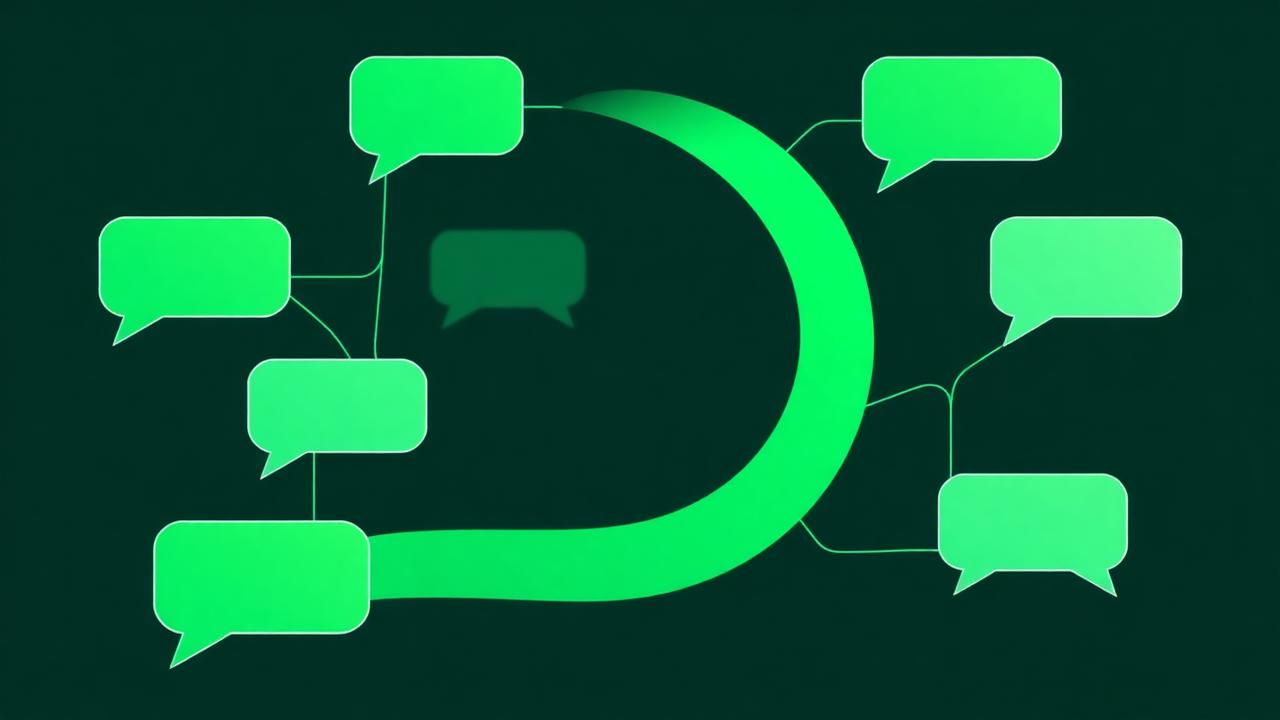
Walk into any business considering a WhatsApp investment and you'll hear the same pitch: 'We'll build a chatbot.' Walk into the businesses actually winning on WhatsApp — the ones with 40%+ revenue attribution from the channel — and you'll hear something different. They built a conversational system.
The distinction sounds semantic. It isn't. It's the difference between a tool that answers questions and a tool that completes work.
The chatbot ceiling
Classic chatbots model conversations as decision trees. The user picks option A, B, or C. Each path leads to a script. When the script ends, so does the value. Customers describe the experience as 'fine' — which is the polite version of 'I'll use the website next time.'
Conversational systems model conversations as state attached to real business objects: an order, a booking, a ticket, an account. Every message moves the object forward. The conversation doesn't end when the script does — it ends when the work is done.
What 'closing the loop' actually means
Take a refund request. A chatbot acknowledges the request and tells the user 'a team member will be in touch within 24 hours.' A conversational system does this:
- Identifies the order from the customer's WhatsApp number and the message context
- Checks the refund policy and the order's eligibility automatically
- Issues the refund through the payment provider or escalates with full context if it can't
- Notifies the warehouse if a return label is needed and texts the label to the customer
- Updates the CRM, marks the ticket resolved, and follows up 48 hours later to confirm receipt
The customer experiences one conversation. Behind it, six systems coordinated. That's the loop closing — and it's what makes customers say 'wait, that was it?' when they expected to fight.
The architecture shift
Building this isn't a matter of buying a better chatbot platform. It requires three things most chatbot stacks don't have: a state machine that survives across sessions, two-way integration with operational systems (not just read-only lookups), and an escalation model where the AI hands off mid-flow without losing context.
"If your WhatsApp implementation can't cancel an order, it's not a customer service channel. It's a marketing channel pretending to be one."
Why this matters now
WhatsApp is the highest-intent channel most businesses own. Customers don't open WhatsApp to browse — they open it to do something. Treating it like a flashier email newsletter wastes that intent. Treating it like an operational surface compounds it.